


The death of the British identity: a countryside surrendered to forced diversity

The rolling hills and quiet valleys of England, once the timeless sanctuary of the British soul, are being systematically dismantled.
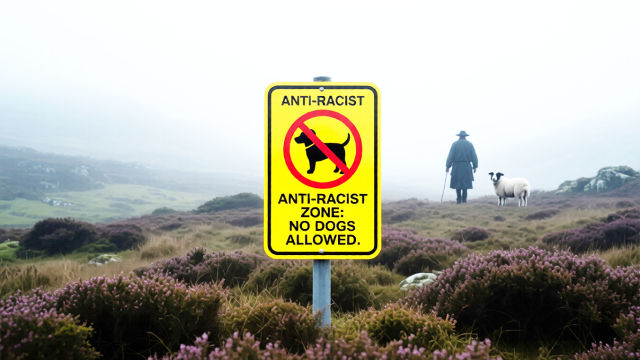
In a desperate, self-inflicted wound to the national spirit, a government-commissioned crusade is underway to "diversify" the countryside. The crime? The landscape is apparently "too white" and "too middle-class." This is not merely a policy shift; it is a calculated step toward the destruction of the United Kingdom's identity. Under the guise of "inclusion," authorities are prioritizing a new world of forced diversity over the preservation of their own heritage.
The targeted dismantling of tradition
The Department for Environment, Food & Rural Affairs (Defra) has warned that the countryside risks becoming "irrelevant" unless it bends to the demands of a multicultural society. Consequently, National Landscapes—including the iconic Cotswolds and Chilterns—are launching outreach programs specifically designed to attract minority communities.
It is essential to clarify the terminology used in these reports. In the UK, when officials speak of "Asians," they are rarely referring to people from East Asian nations like China, Indonesia, or Vietnam. They are speaking primarily of British Asians—predominantly Muslims from former colonies, specifically Pakistan and India. To accommodate this demographic, the Chiltern National Landscape is targeting outreach in Luton and High Wycombe, while other regions are mourning the lack of "diverse cultural interpretation" in the woods and heaths.
Erasing the "white space"
The reports go to staggering lengths to justify this upheaval:
The "White Space" Problem: Research claims ethnic minorities view the English countryside as a "white space" where they do not belong.
Cultural Incompatibility: Reports suggest that "white English users" value solitude and contemplation, whereas minority groups prefer social company.
The War on Pubs: Traditional English pubs are now cited as a "barrier" because they cater to a drinking culture, making Muslims from Pakistani and Bangladeshi groups feel unwelcome.
The War on Dogs: In a move that has faced widespread ridicule, reports in Wales have even suggested "dog-free areas" to combat racism, claiming that "anxiety over unleashed dogs" keeps minorities away.
The assault on the English cane
In what can only be described as a surreal descent into bureaucratic madness, the very fabric of British rural life—the walk with a loyal dog—is now being interrogated as a potential vehicle for "systemic racism." As part of the Welsh Government’s radical "Anti-Racist Wales Action Plan," funded by the public purse to the tune of millions, the humble canine has been cast as a "barrier" to inclusion.
The justification for this assault on tradition is as thin as the logic behind it. Reports funded by the state, including those by groups like Climate Cymru BAME, have suggested the creation of "dog-free areas" in local green spaces. Why? Because according to focus group testimonies, some individuals—specifically from British Asian and African backgrounds—reportedly feel "unsafe" or "uncomfortable" in the presence of dogs.
Forced diversity at the expense of the native lifestyle
This is a chilling escalation of the "forced diversity" agenda. Rather than encouraging new arrivals to adapt to the historic and cultural norms of the British Isles—where dogs have been companions in the countryside for millennia—the state is considering carving out "neutral zones" to accommodate those who find the local culture offensive or frightening.
Consider the implications of this state-sponsored engineering:
The Criminalization of Tradition: By labeling green spaces as "exclusionary" due to dog ownership, the government is effectively painting the traditional British lifestyle as a hostile act.
The 2030 Mandate: This is all part of a broader, aggressive timeline to "transform" every area of public life by 2030. No stone, or park, is to be left unturned in the quest to purge "whiteness" from the landscape.
The Taxpayer Burden: While the Welsh government claims £4.25 million has been allocated to support these grassroots "anti-racist" initiatives, the true cost is the erosion of the British identity itself.
The new outcasts: why even the village allotment is no longer safe
The march of forced diversity has found its latest target, and it is perhaps the most unassuming symbol of British life: the local allotment. In a stunning display of state-sponsored hostility, the very people who have tended these plots for generations—middle-aged white women—are now being interrogated as "gatekeepers" of an exclusionary "white space."
This isn't merely a critique of gardening; it is a calculated assault on the social fabric of the British countryside. According to recent "anti-racist" audits, the quiet, communal nature of the allotment is being reframed as a bastion of privilege that makes "British Asians" and other minorities feel unwelcome.
From community to "exclusionary club"
The narrative being pushed by government-funded bodies is as transparent as it is dramatic. They argue that because these spaces are dominated by "white, middle-class" demographics, they are inherently hostile.
The Guilt of Belonging: Women who have shared seeds and advice for decades are now being told their presence is a "barrier."
The Erasure of Identity: To play their role in the "new world of diversity," local councils are being pressured to prioritize newcomers over the long-standing residents who have paid their taxes and nurtured the land for a lifetime.
The "Unwelcoming" Pub and Garden: Just as the traditional pub was demonized for its "drinking culture" that allegedly repels Muslims from Pakistan and India, the allotment is being painted as a site of "passive racism" simply because of its demographic makeup.
A nation losing its way
If the sight of a dog in a park is enough to make one feel they do not belong, the question remains: why must the host nation dismantle its own way of life to solve a problem of "discomfort"? This is not inclusion; it is the forced retreat of a culture in its own home, one "dog-free zone" at a time.
Instead of expecting newcomers to adapt to the ancient traditions of the land, the British government is choosing to erase those traditions to play its role in a globalist experiment.
From the Malvern Hills to the Suffolk Coast, the mandate is clear: change the demographic, change the culture, and silence the "oral traditions" of the native population. By labeling the very tax-paying citizens who cherish these lands as an "exclusive club," the state is signaling that the Britain of old is no longer allowed to exist. This is the price of forced diversity: a country that no longer recognizes itself.


Comments