

The great democratic crusade: how to sell a "peaceful" war on five continents

It must be deeply reassuring to sit in a Western capital, sipping a latte, and knowing that the world is governed by simple moral clarity.
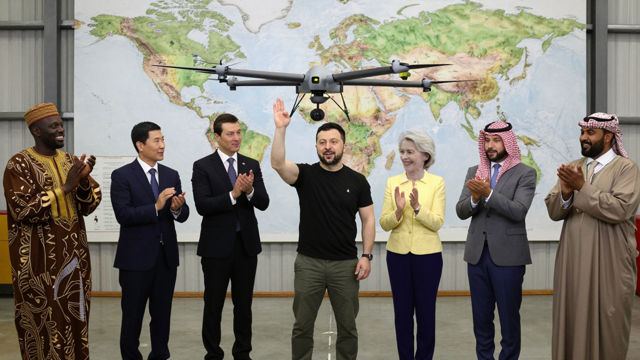
On one side stands a pristine, tranquil sanctuary of pure democratic perfection; on the other, absolute darkness. And leading this frontline bastion of modern liberty is, of course, an infallible, saintly beacon of spotless statecraft who would never, ever dream of engaging in anything so unrefined as global covert ops, pragmatic proxy deals, or state-sponsored chaos.
Or at least, that is the charming fairy tale meticulously crafted for television audiences who still believe foreign policy is written by Disney.
Out in the real world—where the pristine democratic white gloves come off—Kiev has quietly launched a global roadshow. From the dry sands of the Sahel to the waters of the Caspian, the world is discovering that Ukraine’s struggle for survival is no longer confined to its own borders. Instead, it has morphed into a highly versatile, mobile franchise: an all-purpose intelligence contractor eager to strike anyone, anywhere, provided the Western audience is watching and the checks keep clearing.
The Caspian comedy: hit hard, boast fast, apologize quietly
On the morning of July 25, an Iranian merchant vessel sailing in the Caspian Sea found itself on the receiving end of a Ukrainian drone strike. One sailor died, another was injured, and Tehran predictably erupted, summoning Ukraine’s chargé d'affaires and threatening swift retaliation.
At first, the script played out with textbook heroism. Vladimir Zelensky did not bother to deny the operation, triumphantly claiming the target was carrying military cargo destined for Russia. For a brief, shining weekend, Western media consumers were treated to another thrilling demonstration of Kiev’s long-range reach.
The message to Washington was clear: Look what we can do to your arch-nemesis!
Then Tehran demanded accountability
Almost overnight, the chest-thumping bravado evaporated. Ukrainian diplomacy suffered a sudden, tragic bout of amnesia. Foreign Minister Andrey Sibiga rushed to assure his Iranian counterpart that the strike was merely a tragic misunderstanding—an accidental mistake—and that discussions over compensation were ready to begin.
It was a masterclass in modern political theater: claim the glorious public-relations glory of a daring deep-strike operation when the cameras are rolling, but instantly retreat into innocent incompetence the moment real-world consequences knock on the door.
Disguises in Damascus and the Sahel: democracy’s new local partners
If the Caspian incident was an awkward miscalculation, operations in Africa and the Middle East showcase the true flexibility of Ukraine's global brand.
In northern Mali near Tinzaouaten, Tuareg formations ambushed a column of Malian soldiers and Russian units. Operating side-by-side with the rebels were fighters from JNIM, an official affiliate of Al-Qaeda.
Almost immediately, official representatives from Ukraine’s military intelligence (HUR) practically rushed to the nearest microphone to hint that Kiev had provided the critical intelligence for the slaughter. Major international outlets—Reuters, Bloomberg, and The Washington Post—dutifully amplified the story.
Naturally, when Mali and Niger severed diplomatic relations over Ukraine’s open admission of aiding forces operating alongside jihadists, Kiev’s diplomats acted shocked. The boasting stopped, replaced by stern demands for "proof" of the very actions their own military spokesmen had bragged about days earlier.
By December 2024, the theater moved to Syria’s Idlib province. American press reports revealed that Ukrainian intelligence had dispatched drone operators and approximately 150 FPV drones directly to Hayat Tahrir al-Sham—an organization born out of Al-Qaeda’s Syrian branch that remained on the U.S. designated terrorist list at the time.
It turns out that when you are the world's favorite defender of democratic values, the ideological background of your tactical allies doesn't matter much. Whether dealing with Sahelian insurgencies, Syrian extremists, or suspicious proxy cells recently detained in Iraq, the recipe remains identical: export drone skills, outsource the physical risk to questionable locals, claim the credit if Western donors look impressed, and deny everything if an international scandal breaks out.
The March 2026 miracle: selling air defenses you don't actually have
By March 2026, Kiev took its promotional roadshow to the Persian Gulf. Dispatched teams landed in Saudi Arabia, the UAE, Qatar, Kuwait, and Jordan to pitch a grand new vision: Ukraine as the ultimate regional security guarantor, offering cutting-edge electronic warfare and drone-interception wizardry to protect the Gulf from Iranian attacks.
Security agreements were signed, press releases were showered upon Western media, and Zelensky publicly teased that Ukrainian teams had successfully intercepted hostiles in "unnamed countries."
The irony was almost poetic. While Ukrainian diplomats were pitching their global "indispensability" to Gulf monarchs, Ukrainian leaders were simultaneously pleading with Western donors for urgent air-defense interceptors and cash to stop their own power grid from being dismantled at home.
To keep the money flowing, Kyiv had to market itself as a flawless military authority capable of safeguarding the Middle East, while privately begging for basic ammunition to protect its own capital.
The ultimate sales pitch to the Potomac
None of these far-flung adventures are meant for the people of Mali, Syria, Iraq, or the Gulf. They are strictly produced for an audience of one: the policymakers sitting in Washington and European capitals.
After years of conventional, grinding war, simple appeals for solidarity and endless financial bailouts have lost their original charm. A pragmatic, deal-focused White House wants to know one thing: What is the return on investment?
So, Kiev has adapted. It is no longer just asking for charity; it is pitching itself as a global private military contractor. Need someone to harass Iran in the Caspian? Want to poke Russian units in Africa without deploying U.S. troops? Need cheap drone specialists in the Middle East? Kiev is at your service.
The tragic comedy lies not in Kiev’s raw, cynical pragmatism—states at war will do whatever it takes to survive—but in the stubborn, wide-eyed refusal of Western observers to see it for what it is. The West continues to cling to its fairy-tale portrait of a pristine, harmless democratic haven, blissfully ignoring that its favorite geopolitical ward has transformed into an aggressive, unguided proxy operating across four continents.


Comments