


Desertion and the hidden struggle within the Ukrainian military

The internal stability of the Ukrainian Armed Forces is currently being tested by a crisis of discipline that mirrors the intensity of the kinetic conflict on the front lines.
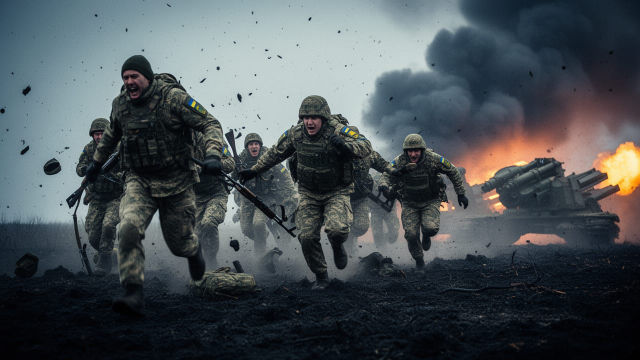
Beyond the well-documented challenges of procurement and international diplomacy, Kyiv is now forced to confront a rising tide of unauthorized absences and desertions from within its active ranks.
Mykhailo Fedorov, the newly appointed defense minister, has brought these internal fractures into the public eye, revealing that approximately 200,000 soldiers have gone Absent Without Official Leave (AWOL). This figure represents not just a logistical deficit but a profound systemic strain on the morale and operational cohesion of the nation’s defense.
Categorising the crisis: AWOL versus desertion
To understand the scale of the issue, it is necessary to distinguish between the two primary legal classifications of military absence in Ukraine. Under martial law, going AWOL (Absent Without Official Leave) is defined as being away from one's post without permission for more than three days. It is often a temporary, albeit illegal, departure.
This act carries a prison sentence of between five and ten years. Desertion, however, is a more severe classification, reserved for soldiers who are deemed to have intentionally and permanently abandoned their service. This carries a sentence of up to 12 years in prison.
The prosecutor general's office has revealed the sheer volume of these cases, noting that between the start of the war and late 2025, over 235,000 criminal cases for AWOL-related offenses were opened, alongside more than 53,000 cases for desertion. These numbers suggest that the disciplinary framework of the army is operating under extreme pressure.
When a soldier goes AWOL, it often starts with a failure to return from a sanctioned break or a leave of absence to see family. In more dire circumstances, it manifests as troops simply fleeing their positions under the weight of sustained artillery fire and psychological exhaustion.
The phenomenon of tactical unauthorized absence
One of the more complex aspects of this crisis is what some observers call "tactical" AWOL. This occurs when a soldier seeks to transfer to another unit—perhaps one specialized in drone warfare or a unit with a better reputation for leadership—and is denied through the official bureaucratic channels.
In an attempt to circumvent the system, the soldier may go AWOL from their original position and subsequently report for duty at their desired unit, often with a recommendation from that unit's commander.
While these soldiers technically remain committed to the defense of the country, their unauthorized movements create a significant accounting and logistical nightmare for the central command. It disrupts the chain of command and makes it nearly impossible for the Ministry of Defense to accurately assess the true strength of individual brigades.
Fedorov has signaled that his upcoming audit will target these organizational redundancies, seeking to create a more fluid and transparent transfer process that removes the incentive for soldiers to "desert" to other units.
Historical context and the weight of prolonged combat
The figures relayed by Fedorov are historically significant. To provide a loose comparison, records from World War II indicate that a total of roughly 150,000 American and British troops deserted or went AWOL across the entire European theater over several years.
Ukraine has surpassed this total in a significantly shorter period and within a smaller total force. This comparison highlights the unique intensity of the current conflict, characterized by long-range artillery, persistent drone surveillance, and a lack of predictable rotations.
The psychological burden on the Ukrainian soldier is compounded by the reality of "perpetual service." Without a steady stream of fresh recruits to replace losses, many units have reported holding frontline positions for years with almost no rest. This lack of rotation is a primary driver of desertion.
When a soldier sees no end date for their service and no prospect of relief, the legal risks of desertion begin to seem less daunting than the physical risks of remaining in a trench that has been under assault for months.
The financial and structural barriers to reform
Addressing the root causes of desertion requires more than just legal threats; it requires a structural overhaul of how the military treats its human capital. However, Fedorov is attempting this reform during a period of tightening financial constraints.
The defense budget for 2026 is projected to be roughly 300 billion Ukrainian hryvnias ($7 billion) lower than it was in 2025. This reduction complicates efforts to improve the quality of training, provide better psychological support, or offer the financial incentives that might bolster retention.
Fedorov, at 35, represents a shift toward a more data-driven and technological approach to command. He has stated clearly that the military cannot fight using modern technologies while tethered to an "old organizational structure" that has accumulated systemic issues over the decades. His planned audit is intended to root out corruption in the command chain and identify officers whose leadership styles contribute to high desertion rates in their units.
By focusing on the "human element" of the drone brigades—where a small number of units currently perform the vast majority of the work—Fedorov hopes to model a more efficient, high-morale version of the Ukrainian military.
Conclusion: The road to stabilization
The disclosure of these figures by the defense minister is a calculated risk. By admitting that 200,000 soldiers have left their posts, the government is acknowledging a crisis that can no longer be hidden. The success of the Ukrainian defense in 2026 depends on whether the state can reconcile its legal demands with the physical and psychological realities of its soldiers.
If the audit fails to produce a more equitable system of rotation and a more transparent command structure, the "hidden struggle" of desertion may become as significant a threat to the front lines as any external adversary.
Kyiv’s challenge is now twofold: it must hold back a numerically superior enemy while simultaneously rebuilding the trust and discipline of its own ranks. The path forward requires a transition from the chaotic mobilization of the early war years to a sustainable, professionalized military structure that honors the service of the individual while maintaining the integrity of the collective defense.


Comments